How much turning space does a mobility scooter need in shops and narrow corridors?
@easygoingwheels
A scooter needs enough clear space to turn without clipping shelves, door frames, other shoppers or the scooter itself. For a compact, foldable model, the practical answer is to allow a clear turning circle roughly in line with the scooter's stated turning radius, then add breathing room for bags, people and sudden stops. In tight shops, the easiest route is often a wide approach, a slow pivot, then a straight exit rather than one smooth U-turn.
Turning space is not just a number on a specification sheet. It depends on the scooter's length, the position of the seat, the width of the tiller, the size of the wheels and how sharply the front end can angle. A smaller machine can still feel awkward if the seat sits far back or the turning circle is generous. A longer machine may feel steady outdoors but demand more room at a checkout or inside a lift.
Why turning radius matters in everyday places
Turning radius describes the space needed for the tightest circular turn. A smaller radius means the scooter can rotate in a narrower area. That matters most where there is no room to reverse far, such as a shop aisle, a caf entrance, a hallway or the space beside a table.
For city use, there is a balance. A short, light scooter is easier to fold, carry and manoeuvre indoors. It may also feel more affected by small bumps, seams and uneven paving. A model with larger wheels may roll more smoothly over pavement joints, yet it can need more space to swing around. The best choice depends on the places that matter most: supermarket aisles, pavements, public transport, home doorways or all three.
Think about the route, not only the vehicle. A corridor with a door that swings inward can feel wide until the door opens. A shop aisle may be clear at one end and blocked by a display at the other. A lift may have enough floor space but a narrow opening. These details often decide whether a scooter feels easy or frustrating.
Measure the places you use most
A useful way to judge turning needs is to measure the spaces where the scooter will actually go. Door openings, hallway widths, lift entrances and the gap between shelves are more helpful than general assumptions. Write down the tightest width and the smallest open area you can find. Then compare those figures with the scooter's published dimensions and turning radius.
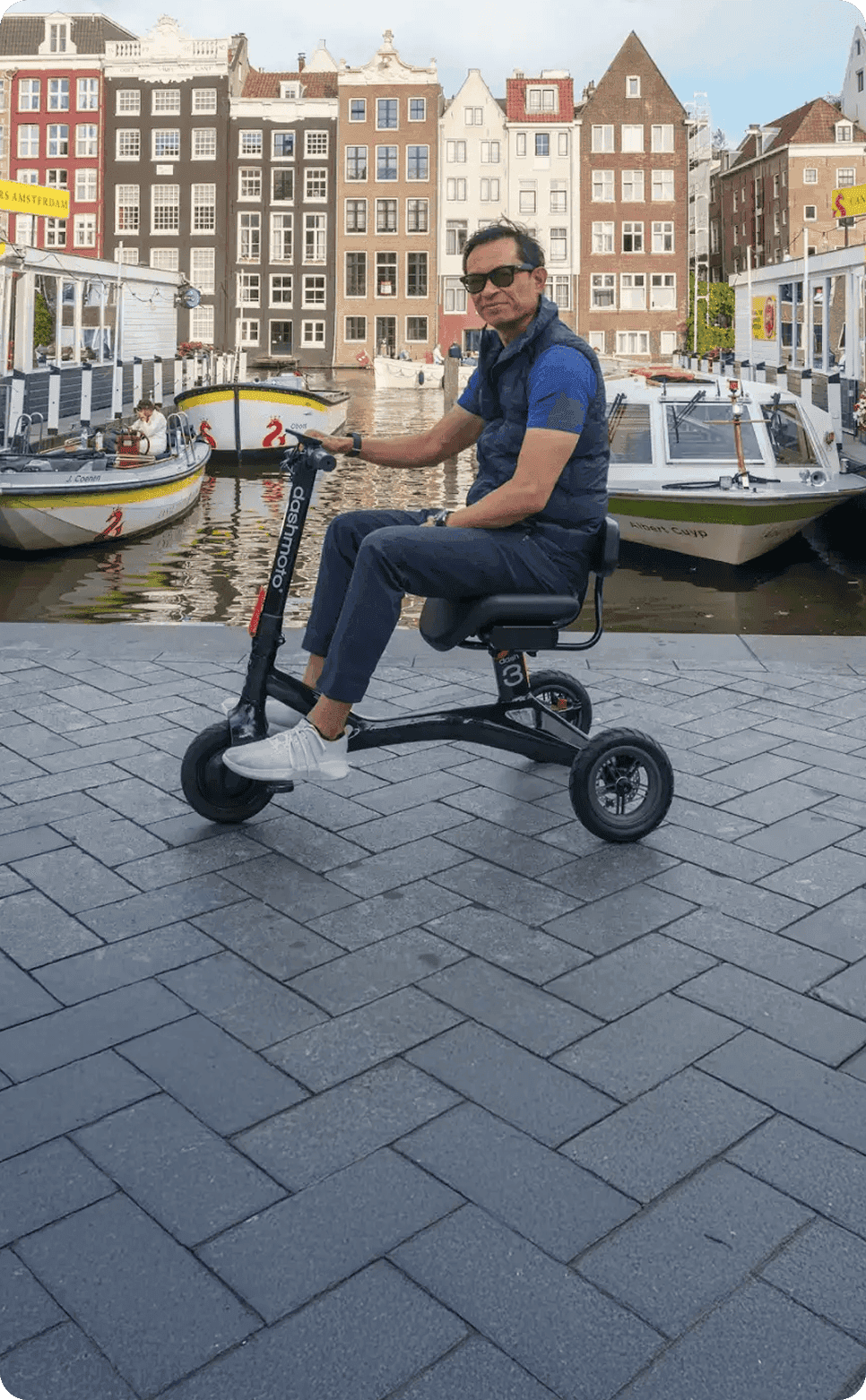
Allow more room than the bare minimum. A wall-to-wall corridor might technically fit a scooter, but it leaves no space to open a door, pass another person or adjust your position. A practical approach is to leave a margin on each side, especially where people move in both directions. Comfortable mobility for city errands depends on that margin as much as the scooter's size.
Also check what happens at the end of a route. A dead-end aisle needs enough room to turn around or reverse safely. If reversing is the only option, the view behind and the sound of the scooter matter. Mirrors or a clear view over the seat can help, but a slow speed and a clear path still matter most.
What to watch for in shops
Shops are full of temporary obstacles. Floor displays, queuing rails, open doors, trolleys and people standing still can shrink an aisle without warning. Turning in the middle of a busy route can be awkward, so it is usually better to pull to one side, stop, then turn when the way is clear.
Look at shelf ends before entering an aisle. A narrow shelf end may be fine for travelling straight forward but poor for rotating. Checkout areas can be tighter still, especially where counters sit close together. A compact scooter can make these places less stressful, but the seat and tiller still need space to move through a clean arc.
If a shop has a kerb ramp or a small step at the entrance, that transition matters too. The approach needs enough room to line up straight. Trying to turn halfway up a ramp is unstable and can catch a wheel edge. Enter slowly, keep the scooter square to the slope and turn only once all wheels are on level ground.
Indoor manoeuvrability and daily routes
Indoor manoeuvrability is shaped by several small details. A scooter with a narrow overall width can pass through doorways more easily. A shorter wheelbase can reduce the space needed to rotate. A responsive tiller helps with careful positioning, while smooth controls make low-speed movements easier to judge. Seat cushioning and tiller adjustment can also affect comfort on longer trips, because a person who sits securely and reaches the controls naturally tends to move with more confidence.
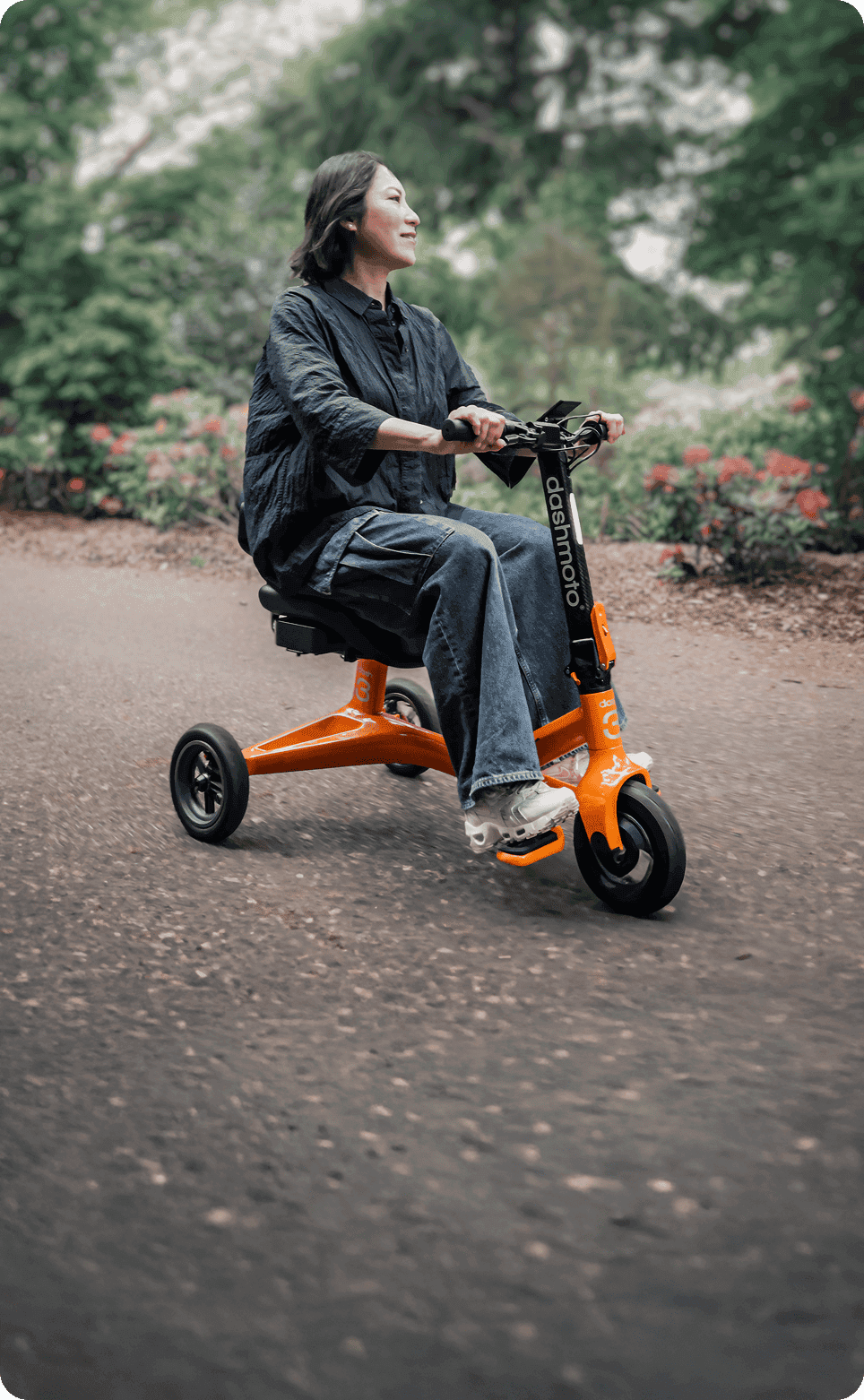
In a home or apartment, pay attention to furniture with legs, loose mats and thresholds. These are not always problems, but they can catch wheels or make a turn feel sudden. Keeping a regular route clear makes a bigger difference than choosing a scooter purely on the smallest published width.
At home, simple checks can be done with the scooter switched off and stationary. Stand it in the doorway or hallway and check whether the handles, seat and wheels clear the frame. Make sure the path is dry and free of loose objects. Anything involving wiring, the battery system or a fault with the controls should be left to a qualified professional rather than adjusted by guesswork.
Outdoor spaces and pavement width
Outside, pavement width changes from block to block. A clear stretch may be easy, while a section with signs, bins, parked wheels or building obstacles can narrow quickly. A lightweight city mobility scooter is useful where space is variable, but the rider still needs somewhere to pause and plan the turn.
Ground clearance is another part of the picture. Low kerbs, drainage grooves and uneven paving can be crossed more smoothly when the underside clears them. If the scooter bottoms out, the rider may feel a sudden stop or hear a scrape. That is a sign to change the route rather than force the same line again.
Wheel size affects how the scooter feels over small bumps and cracks. Larger wheels can roll over irregularities with less effort, though they may add length. Smaller wheels can help with compactness, but they can be more sensitive to rough surfaces. The right trade-off depends on whether the route is mostly smooth indoor flooring or mixed city pavement.
Judging the fit before choosing
Start with the tightest space you expect to use. If the scooter can turn there without scraping or repeated shuffling, most wider places will be easier. If the tightest space is a shop aisle, include the chance that someone will be standing at the end of it. If it is a hallway at home, include furniture and door swing.
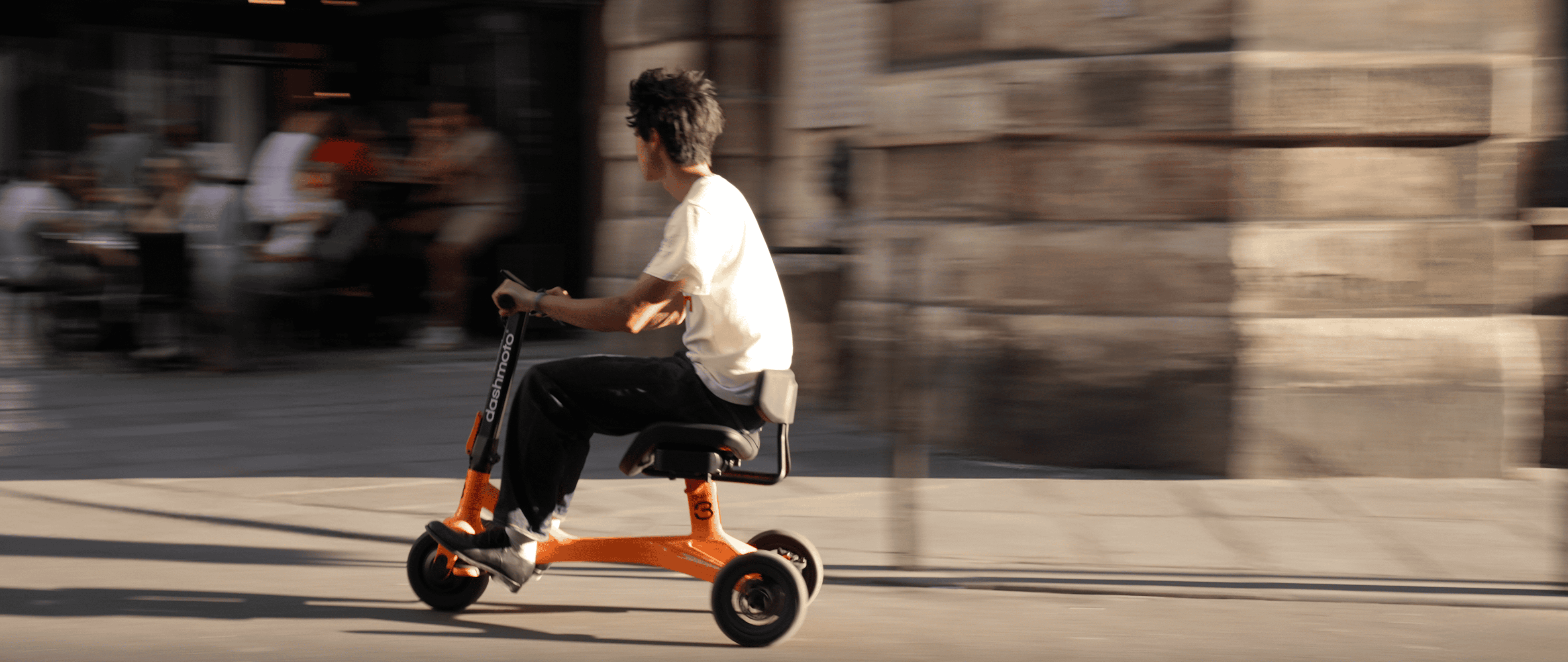
Then compare the feeling of the ride with the places you visit. A scooter that folds for transport may be useful for journeys with a car or public transport, yet the rider should still check that it feels steady at the speeds used on pavements. A model that handles rough ground well may be less convenient in a small shop. There is no single best shape for every route.
Comfortable mobility for city errands comes from matching the scooter to real spaces. Measure the bottlenecks, leave a margin, and look beyond the headline dimensions. A little attention to turning room, pavement width and daily obstacles can make the difference between a scooter that feels restrictive and one that fits naturally into everyday movement.